7 Fixes for Kitchen Drawers That Overfill Too Easily
This site contains affiliate links, view the disclosure for more information.
Kitchen drawers tend to accumulate items faster than most other spaces in a home. You might open one looking for a single spatula and find three whisks, loose rubber bands, and a mystery gadget instead. These fixes offer practical ways to keep drawer clutter under control without requiring a complete kitchen overhaul.
Why Kitchen Drawers Fill Up So Quickly
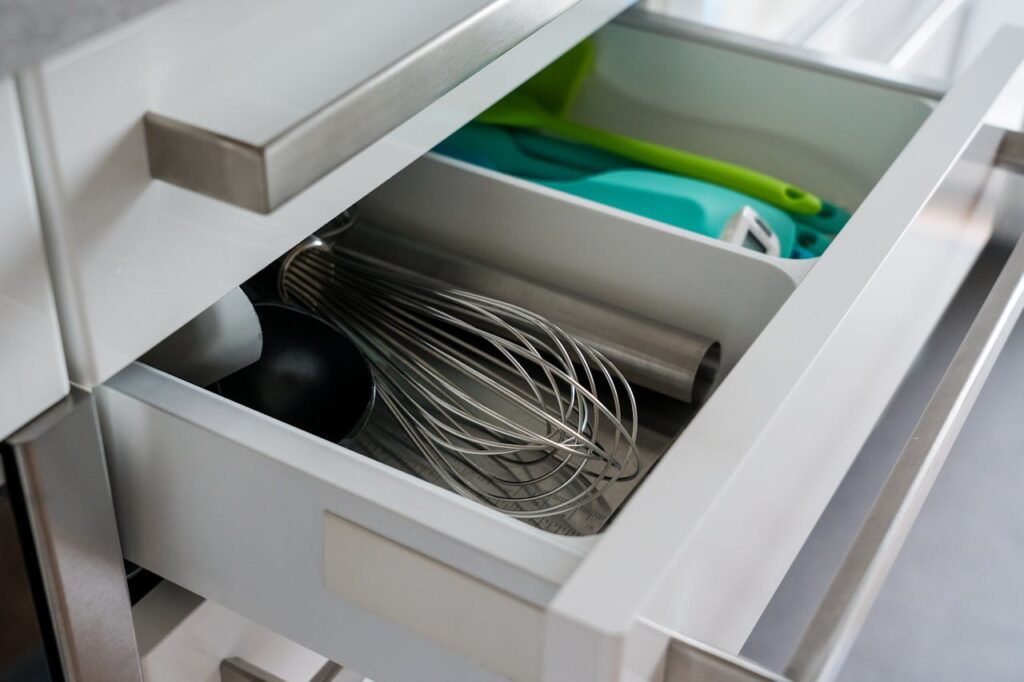
Most kitchens have limited drawer space compared to the number of small items used regularly. Utensils, tools, and gadgets naturally migrate to the nearest open spot. Over time, this creates layers of items that make it harder to find what you need.
The lack of internal structure in many drawers contributes to this pattern. Without dividers or designated zones, items shift around and pile up. A simple adjustment to how the space is divided can make a noticeable difference.
1. Use Adjustable Drawer Dividers to Create Dedicated Zones
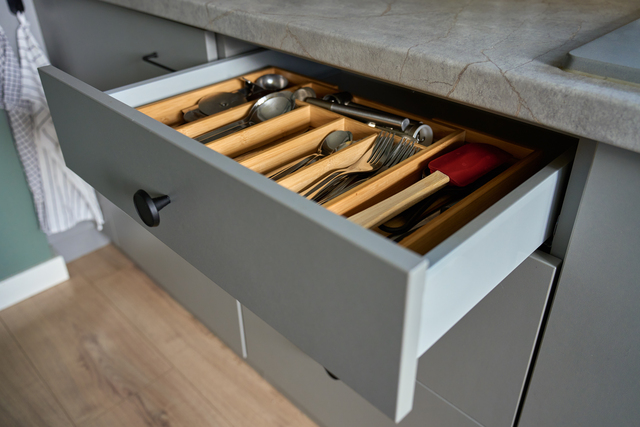
Adjustable dividers help separate items into specific sections within a single drawer. You can place utensil organizers in one area and reserve another for measuring tools. This approach tends to reduce the random mixing that leads to overfilling.
The dividers can be repositioned as your needs change. If you add new tools or remove old ones, the layout adapts without requiring new products. This flexibility makes it easier to maintain order over time.
Some dividers expand to fit different drawer widths. Others use interlocking pieces that stay in place during daily use. Either style works well for most standard kitchen drawers.
2. Remove Duplicate Tools and Single-Use Gadgets
Many kitchens contain multiple versions of the same tool. Three spatulas might seem useful, but if you only use one regularly, the others take up valuable space. Removing duplicates creates room for items you actually reach for.
Single-use gadgets also contribute to drawer overflow. An avocado slicer or egg separator might have seemed essential at purchase, but if it sits unused for months, it’s consuming space. Keeping only versatile tools tends to simplify both storage and cooking.
You might notice that kitchen storage solutions become more effective when the total number of items decreases. Fewer objects mean less shuffling and easier access to what remains.
3. Install Shallow Drawer Inserts for Small Items
Small items like twist ties, bag clips, and spare batteries often get lost in deep drawers. Shallow inserts with compartments keep these pieces visible and contained. This prevents them from migrating to the bottom of the drawer where they’re harder to retrieve.
The inserts can sit inside existing drawers without modification. Most are made from plastic or bamboo and fit standard drawer dimensions. They’re particularly helpful for organizing storage compartments within larger spaces.
Grouping similar small items together also speeds up daily tasks. When you need a bag clip, you know exactly where to look instead of digging through unrelated objects.
Read More: 6 Fixes for Cabinets With Hard to Reach Corner Space
4. Store Bulky Items in Cabinets Instead of Drawers
Large mixing bowls, oversized serving spoons, and bulky gadgets take up disproportionate drawer space. Moving these items to lower cabinets or shelves frees up room for flatter, more frequently used tools. Drawers tend to work better for items that can be laid flat or stood upright in rows.
This shift also makes drawers easier to open and close. Heavy or awkwardly shaped items can catch on the drawer frame or prevent it from sliding smoothly. Lighter, more uniform items reduce that friction.
You might find that cabinets offer better access for items you don’t use daily. Stacking them on shelves keeps them available without crowding the high-traffic drawer space.
5. Use Vertical Dividers to Stand Items Upright
Vertical dividers allow you to store cutting boards, baking sheets, or flat lids on their edges instead of stacking them. This approach uses drawer height more efficiently and makes it easier to grab a single item without disturbing the rest. Drawer dividers designed for vertical storage typically include slots or pegs that keep items separated.
Standing items upright also gives you a clearer view of what’s in the drawer. Instead of lifting stacked layers, you can see each piece at a glance. This tends to reduce the frustration of searching through piles.
Some vertical systems are expandable to fit wider drawers. Others are fixed-width but include multiple slots. Either option works well for organizing flat kitchen items.
Also Read: 8 Pantry Lighting Solutions That Can Help You Stay Organized
6. Label Drawer Sections to Maintain Organization Over Time
Labels help everyone in the household return items to their designated spots. A simple label maker or handwritten tags can mark sections for “measuring tools,” “utensils,” or “gadgets.” This small step tends to prevent the gradual mixing that leads to overfilled drawers.
Labels also make it easier to identify what belongs in each space during cleanups. If an item doesn’t match any label, it might belong elsewhere or could be removed entirely.
The labels don’t need to be permanent. Removable stickers or clips allow you to adjust the system as your needs change without leaving residue.
Also Read: 9 Under Sink Storage Solutions to Organize Your Cleaning Supplies
7. Limit New Purchases by Checking Drawer Capacity First
Before buying a new kitchen tool, you might check whether space is available for it. This simple habit can prevent accumulation before it starts. If the drawer is already full, you can decide whether the new item is worth removing something else.
This approach also encourages thoughtful purchasing. A tool that serves multiple functions might be a better choice than a single-use gadget. Prioritizing versatility tends to keep drawers more manageable.
You might notice that drawer space management becomes easier when new items enter the kitchen less frequently. The existing organization has time to settle into a functional routine.
What to Avoid When Organizing Kitchen Drawers
Avoid overfilling drawers to the point where they’re difficult to open. This creates daily frustration and can damage drawer slides over time.
Don’t assume you need to keep every tool that came with a kitchen set. Many bundled items go unused and contribute to clutter.
Skip organizing systems that are too complex to maintain. If a method requires constant adjustment, it’s less likely to stay effective long-term.
Avoid storing heavy items in shallow drawers. The weight can strain the drawer mechanism and make it harder to slide smoothly.
FAQ
How do I keep kitchen drawers from getting too full?
Regular sorting helps prevent gradual accumulation. You might set a reminder to review drawer contents every few months. Removing items that haven’t been used recently keeps the space functional without requiring constant attention.
What are the best ways to organize overstuffed kitchen drawers?
Start by removing everything and sorting items into categories. Use drawer dividers or inserts to create zones for each category. Return only the items you use regularly, and find alternative storage for the rest.
Why do my kitchen drawers fill up so quickly?
Drawers often lack internal structure, which allows items to pile up randomly. Without designated spots for specific tools, everything ends up mixed together. Adding dividers or compartments tends to slow this process.
How can I maximize space in small kitchen drawers?
Vertical storage helps use the full drawer height instead of just stacking items flat. Shallow inserts for small objects prevent wasted space at the bottom. Removing duplicates and single-use gadgets also creates more room for everyday essentials.
Conclusion
Managing kitchen drawer organization doesn’t require expensive products or major renovations. Simple adjustments like adding dividers, removing duplicates, and storing bulky items elsewhere can make drawers more functional. You might find that these small changes reduce daily frustration and make cooking tasks flow more smoothly. Start with one drawer and see what works for your space.