This site contains affiliate links, view the disclosure for more information.
An overflowing utensil holder can make cooking feel chaotic. When you’re reaching for a spatula and three other tools come with it, simple tasks take longer than they should.
These kitchen utensil storage solutions can help you regain counter space and make your most-used tools easier to find.
Why Kitchen Utensil Holders Tend to Overflow
Most utensil holders are designed to look good on the counter, not to hold everything you actually use. They work fine when you first set up your kitchen, but the problem grows as you add more tools over time.
The issue often isn’t the holder itself—it’s that not every utensil needs to live on the counter. Some tools you use daily, others once a month. Mixing them together creates the overflow problem.
1. Rotate Utensils Based on What You Actually Use for Better Kitchen Counter Organization
Not every cooking tool deserves prime real estate on your counter. Look at what’s currently in your holder and ask which ones you grabbed this week.
Keep 5-7 everyday tools in the holder—things like your go-to spatula, wooden spoon, and tongs. The rest can move to a drawer or secondary storage spot.
Rotating your utensils seasonally can also help. Your grilling tools might earn counter space in summer, while baking utensils take priority in winter.
2. Add a Second Utensil Holder to Divide Cooking Tool Storage by Function
One holder doesn’t have to do all the work. Adding a second container lets you separate tools by how you use them.
You might keep stirring and flipping tools in one holder. Measuring spoons, whisks, and baking tools go in another.
This approach to utensil holder organization means you’re not digging through everything to find what you need. Each container has a clear purpose.
Also Read: 8 Fixes for Countertops That Collect Too Much Stuff
3. Install a Wall-Mounted Rail System for Kitchen Utensil Storage Solutions
A rail with S-hooks moves utensils off the counter entirely. You can hang tools vertically along your backsplash or on an empty wall near the stove.
This setup works especially well for larger tools that make holders tip over. Ladles, slotted spoons, and oversized spatulas hang individually without crowding.
Wall-mounted storage also keeps heat-resistant tools within arm’s reach of your cooktop. You save counter space and gain convenience.
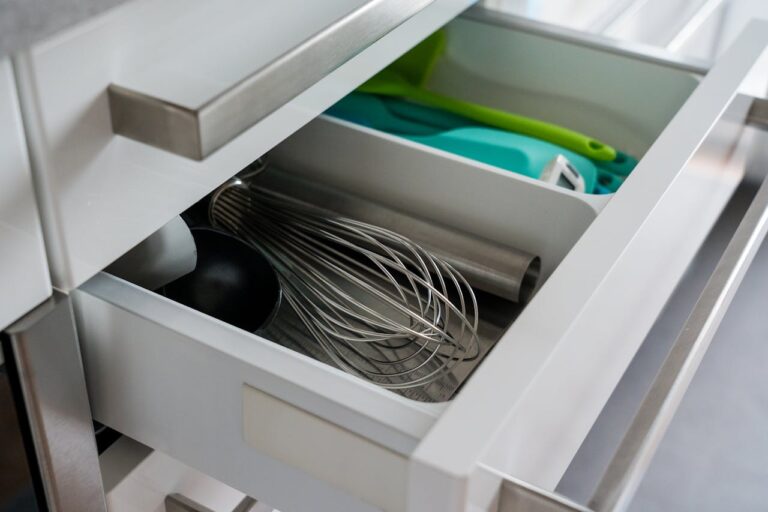
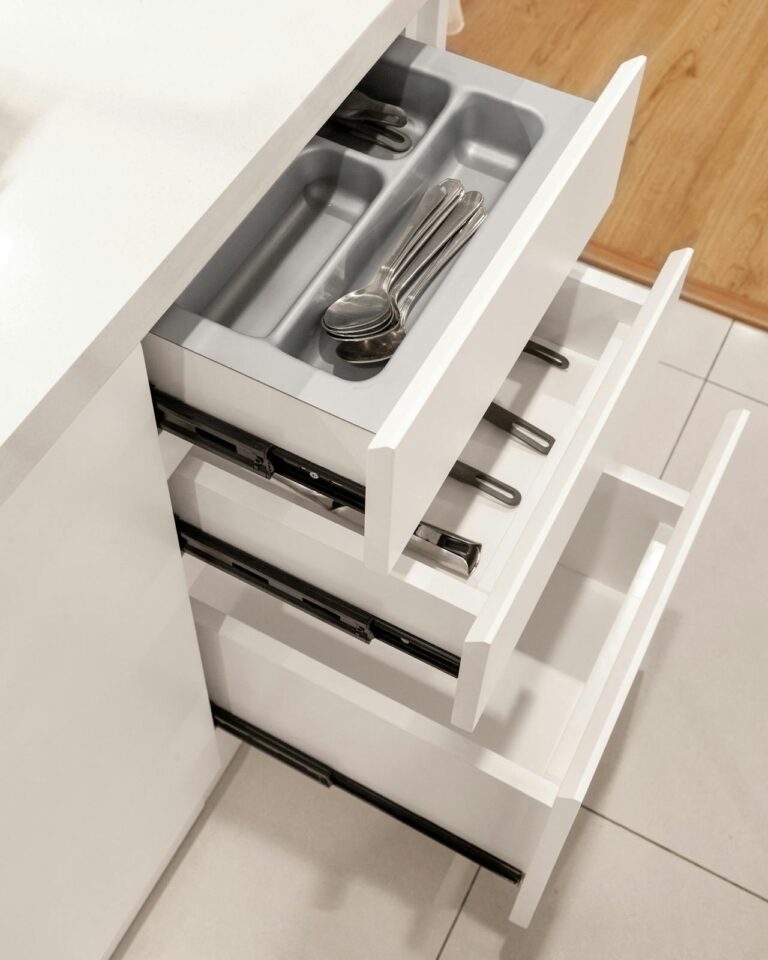
4. Use Kitchen Drawer Dividers to Store Less-Used Cooking Utensils
A deep kitchen drawer can hold more utensils than you’d expect. The key is keeping them organized so you can actually find things.
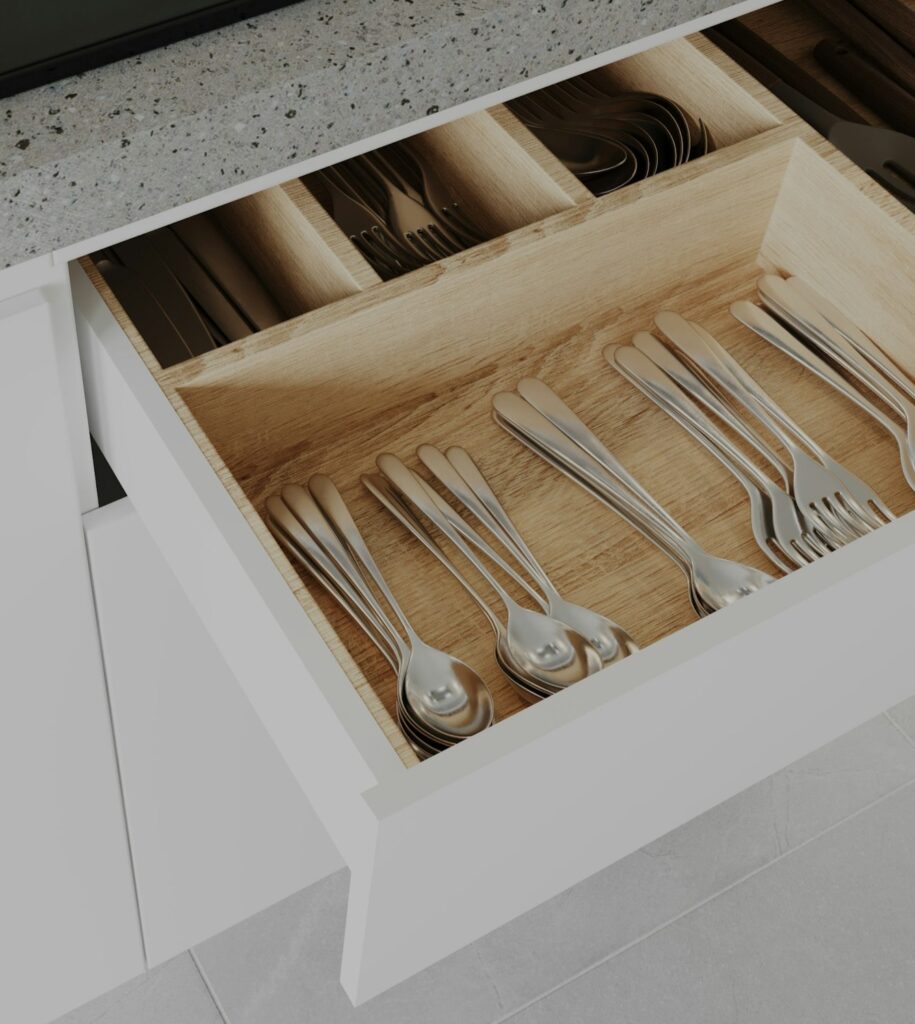
Drawer dividers or expandable organizers create separate compartments for different tool types. Whisks stay with whisks, measuring cups together, spatulas in their own section.
This method works particularly well for flatware storage ideas and specialty tools. Things you need occasionally but not daily stay accessible without taking up counter space.
Read More: 7 Smart Ways to Tackle Kitchen Drawer Organization
5. Keep Only Heat-Resistant Tools Near the Stove for Utensil Overflow Problems
If your holder sits next to the stove, it should only contain tools that can handle the heat. Plastic handles and silicone tools that aren’t heat-rated don’t belong there.
Moving temperature-sensitive utensils away from the heat source naturally reduces what’s in your main holder. It’s a safety improvement that also solves overcrowding.
Metal and wooden tools can stay near the stove. Everything else finds a new home in a drawer or pantry storage.
6. Add a Turning tray for Kitchen Organization Tips That Actually Work
A rotating organizer holds multiple small containers at once. You can group utensils by type in separate cups, then spin the base to access what you need.
This approach combines the convenience of counter storage with better organization. Each tool type has its own space, but everything stays within reach.
Turning trays work especially well in corner areas or on deep counters. You can see and reach every tool without items getting lost in the back.
7. Store Duplicate Kitchen Utensils in a Separate Location for Cooking Utensil Management
Most kitchens accumulate multiple versions of the same tool over time. Three rubber spatulas, four wooden spoons, five pairs of tongs—it happens gradually.
Keep your favorite version of each tool on the counter. The backups can move to a drawer, cabinet, or storage container in the pantry.
Having duplicates isn’t the problem—storing them all in the same place is. Backups are there when you need them, but they don’t create daily clutter.
Also Read: How to Organize Pots and Pans So You Can Find What You Need
8. Use a Utensil Crock in a Cabinet for Extra Kitchen Utensil Storage Solutions
A tall container can sit inside a cabinet just as easily as on a counter. This gives you the same upright storage without using visible space.
Choose a cabinet near your prep area so tools stay convenient. The door can hold the container steady, or you can use a non-slip mat on the shelf.
This hidden storage approach works well for utensil overflow problems when counter space is limited. Your most-used tools stay accessible without contributing to visual clutter.
9. Create a Kitchen Command Center Drawer with Utensil Holder Organization
One organized drawer can replace your overflowing counter holder entirely. Deep drawers near the stove work best for this purpose.
Use a combination of dividers and small containers to keep tools separated. Measuring spoons clip together, whisks stand upright in a cup, spatulas lay flat in a compartment.
The key is making everything visible when you open the drawer. No digging through layers—every tool should be easy to grab.
What to Keep in Mind When Organizing Kitchen Utensils
Not every storage solution fits every kitchen. Counter space, drawer depth, and cooking habits all affect what works best.
Before buying organizers or moving things around, take inventory of what you actually use. You might find you have tools you’ve never touched. Donating or storing those elsewhere solves half the problem.
Also consider how you cook. If you bake often, measuring tools need prime placement. If you’re mostly at the stove, heat-resistant tools should be closest.
Frequently Asked Questions
How do you organize kitchen utensils without a drawer?
Wall-mounted rails with hooks can hold many tools vertically. You can also use tension rods inside cabinets to hang utensils, or add a second holder specifically for less-used items.
Multiple small containers work better than one large holder. Group similar tools together in separate crocks or jars.
What is the best way to store extra kitchen utensils?
Keep extras in a labeled container in your pantry or a high cabinet. This keeps them accessible but removes them from daily rotation.
You might also use a drawer organizer in a less convenient location. The tools are there when needed but don’t compete for prime storage space.
How can I stop my utensil holder from getting too full?
Limit your counter holder to 5-7 tools you use multiple times per week. Everything else should move to a drawer, cabinet, or secondary storage location.
Regular editing helps too. Every few months, remove tools you haven’t reached for. This prevents the slow accumulation that leads to overflow.
Should kitchen utensils be stored on the counter or in drawers?
Both locations can work depending on your space and habits. Counters offer convenience for tools you grab constantly, while drawers keep less-used items accessible but hidden.
Many kitchens benefit from a combination approach. Daily tools stay visible, while everything else goes in organized drawer storage.
How many utensils should fit in one holder?
Most holders work best with 5-8 tools maximum. More than that and you’re likely dealing with crowding, tipping, or difficulty finding what you need.
If you need more tools accessible, add a second holder rather than overstuffing one. This maintains organization and keeps individual tools easy to grab.
Time to Tackle That Overflowing Holder
Kitchen utensil storage solutions don’t require a full kitchen renovation. Small changes in how you organize and rotate your tools can make daily cooking smoother.
Start with one approach that fits your space and habits. You might find that a simple edit of what stays on the counter solves most of the problem.