This site contains affiliate links, view the disclosure for more information.
Finding expired crackers shoved in the back can be frustrating. When your pantry food organization isn’t working, you might find yourself throwing food away.
These fixes can help you set up a system where you’ll know what you have and actually use it.
Why Pantry Food Gets Lost and Expires
Food tends to disappear in pantries for a few simple reasons. Deep shelves hide things in the back. Tall items block shorter ones from view.
When you can’t see what you have, you might buy duplicates. Those extras sit unused while the original items expire. Better pantry storage solutions can help you avoid this cycle.
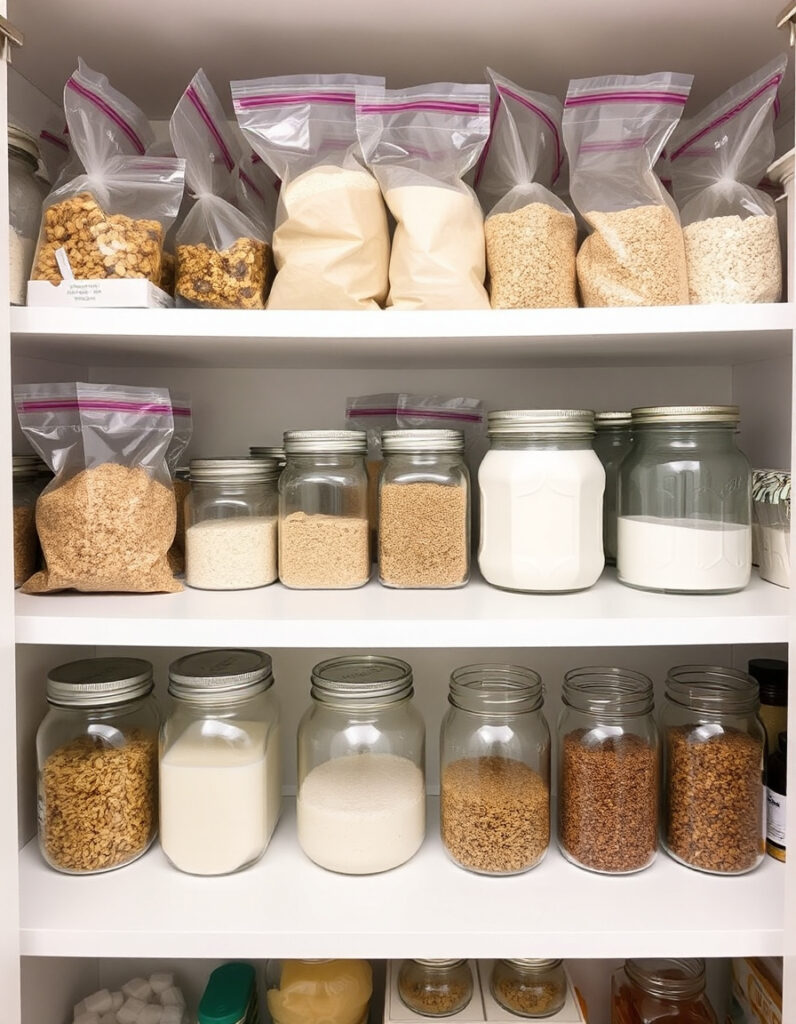
1. Use Clear Containers for Pantry Food Organization to See What’s Inside
Boxes and bags hide what’s actually left inside them. You might think you have more cereal than you do, or forget about that half-empty bag of flour.
Clear containers let you see exactly what you have at a glance. They also keep food fresher longer than open packages.
Label each container with the expiration date from the original package. Write it on a piece of tape that you can change when you refill.
2. Install Pull-Out Shelves in Deep Pantry Spaces to Organize Pantry Shelves
Deep shelves create dead zones where food goes to hide. Items in the back become invisible and forgotten.
Pull-out drawers or sliding organizers bring everything forward. You can see all the way to the back without moving things around.
This single change can make a big difference in how you use your space. Everything becomes accessible with one motion.
3. Create Zones by Category for Better Pantry Storage Solutions
Grouping similar items together can help you find things faster. Baking supplies in one area, snacks in another, canned goods together.
When everything has a designated spot, you’ll notice when you’re running low. You’re also less likely to buy duplicates.
Keep the items you use most often at eye level. Less-used things can go on higher or lower shelves.
Read More: 6 Ways to Fix a Cutting Board That Keeps Slipping around
4. Set Up a First-In, First-Out Rotation Method for Food Expiration Management
This pantry rotation method is simple but effective. When you buy new items, place them behind the older ones.
The oldest food stays at the front where you’ll grab it first. This rotation can help prevent things from expiring in the back.
You might want to add a small piece of tape with the purchase date on items without clear dates. It takes a few seconds but can save you from waste later.
5. Use Risers and Tiered Organizers to Improve Pantry Visibility
Flat shelves hide shorter items behind tall ones. Risers create steps so you can see multiple rows at once.
Look for expandable risers that adjust to fit your shelf width. They can maximize your space without permanent changes.
Also Read: 6 Solutions for Reusable Containers That Don’t Nest Properly
6. Keep a Simple Pantry Inventory System Near Your Kitchen
A small whiteboard or notepad on the pantry door can help track what needs using soon. Write down items as they get low or approach expiration.
This visual reminder might help you plan meals around what needs eating. You can also check the list before shopping to avoid duplicates.
Update it once a week while you’re putting away groceries. It only takes a minute and can prevent expired food management headaches.
7. Do a Quick Monthly Check of Pantry Shelves for Expired Food Management
Set a recurring reminder to review what’s in your pantry. Look for expiration dates and items you haven’t touched in months.
Move things that expire soon to the front or to a designated “use first” bin. This monthly habit can catch things before they go bad.
Donate unexpired food you know you won’t use. Someone else can enjoy it instead of it sitting unused.
Small Changes That Can Help Reduce Pantry Food Waste
You don’t need to overhaul everything at once. Start with one or two changes that address your biggest frustration.
Maybe that’s clear containers for bulk items. Or perhaps just adding a riser for your canned goods.
The goal is making your pantry work for how you actually use it. Small adjustments can often make a noticeable difference over time.
FAQ
How do you keep track of expiring food in your pantry?
A simple system works best. Label containers with expiration dates using removable tape or a marker.
Keep items with approaching dates at the front. Some people also maintain a “use first” bin for things expiring within a month.
A quick weekly glance while putting away groceries can help you stay on top of what needs using.
What is the best way to organize a pantry to see everything?
Clear containers and tiered organizers can improve visibility significantly. Group similar items together in designated zones.
Use pull-out shelves or lazy Susans for deep spaces. Keep frequently used items at eye level where you’ll spot them easily.
The key is reducing the number of items hidden behind other things.
How often should you check pantry food for expiration dates?
A monthly check tends to work well for most households. Set a reminder so it becomes routine.
You might also do quick checks when putting away groceries each week. Look at what’s been sitting untouched and move older items forward.
More frequent checks can help if you have a large pantry or buy in bulk.
What pantry organization method prevents food waste?
The first-in, first-out rotation method is particularly effective. Always place new purchases behind older ones so you use things in order.
Combine this with clear storage and good visibility. When you can see what you have, you’re more likely to use it.
Regular reviews also help catch things before they expire.
Can pantry organization really reduce how much food you waste?
Better organization can help you use what you already have. When food is visible and accessible, you’re less likely to forget about it.
You might also avoid buying duplicates when you can see your current inventory. Over time, these small improvements can add up.
The key is finding a system simple enough that you’ll actually maintain it.
Make Your Pantry Food Organization Work for You
These fixes can help you stop throwing away forgotten food. Start with the changes that address your specific pantry challenges.
Better visibility and simple systems might help you use what you buy. You’ll know what you have and can plan meals around it instead of letting things expire.