7 Deep Drawer Organization Ideas to Reduce clutter
This site contains affiliate links, view the disclosure for more information.
Deep drawers seem helpful at first. Then they fill up with random items you forget about. A few simple adjustments can make these spaces work better for everyday use without requiring a complete overhaul.
Why Deep Drawers Fill Up So Quickly
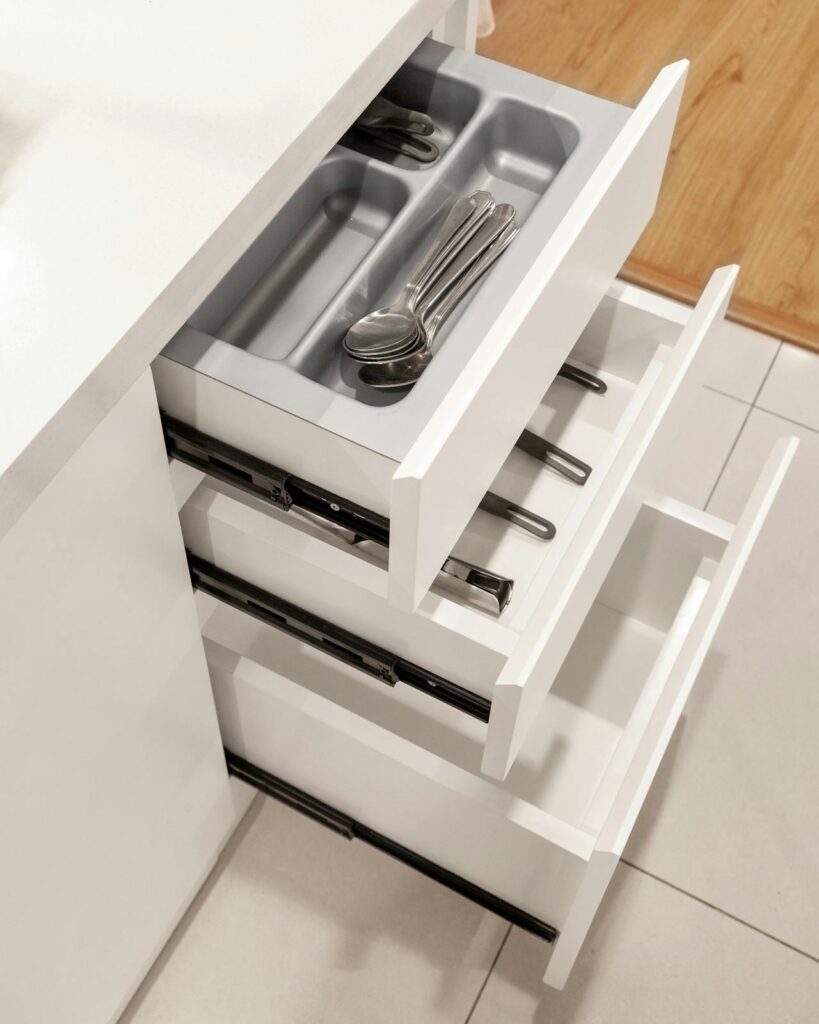
Vertical space tends to encourage stacking. When you have depth, items naturally pile on top of each other. You lose track of what sits at the bottom.
The lack of built-in sections also plays a role. Without dividers, everything slides around when you open and close the drawer. Things end up in corners or buried under newer additions.
1. Use Adjustable Drawer Dividers to Create Defined Zones Within Deep Drawer Spaces
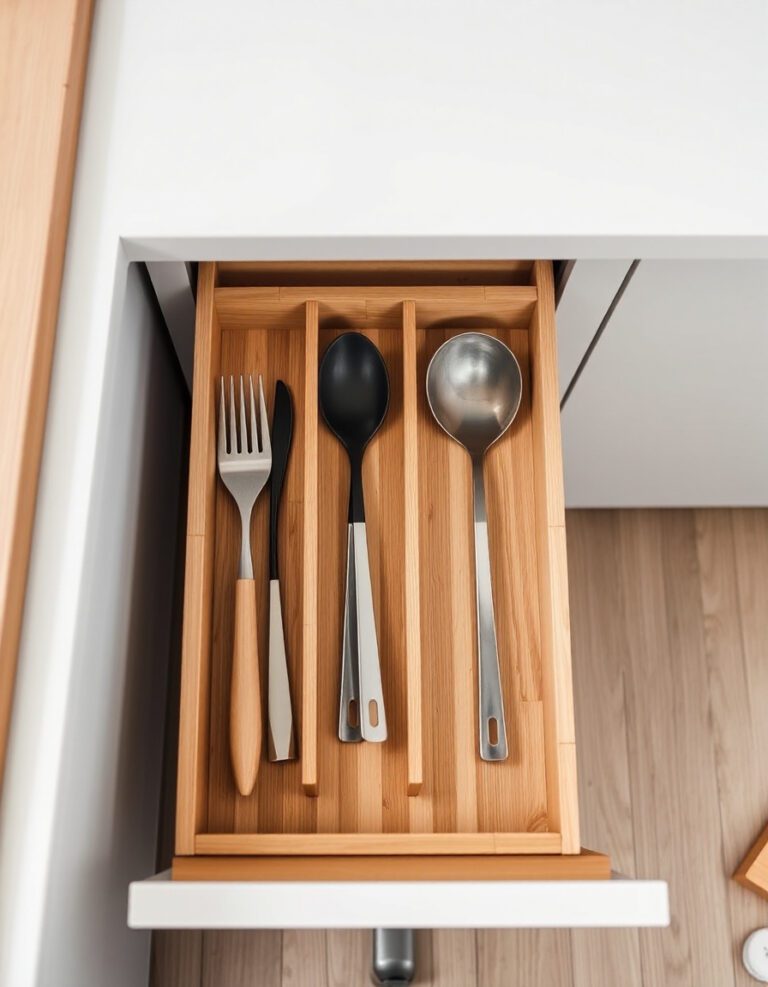
Dividers break up open space into smaller sections. This keeps similar items grouped together. You might notice it’s easier to locate what you need when each zone has a purpose.
Adjustable options work well because drawer dimensions vary. You can shift the dividers as your storage needs change. Spring-loaded styles stay in place without adhesive.
Some people use bamboo dividers for utensils and tools. Others prefer clear acrylic for better visibility. Both types help prevent the junk drawer effect from taking over.
2. Add Stackable Bins to Make Use of the Full Vertical Height in Organizing Deep Drawers
Stackable bins let you layer items without creating a mess. You can pull out the top bin to reach what’s underneath. This approach works for kitchen supplies, craft materials, or office odds and ends.
Clear bins help you see contents at a glance. Label each one if you share the space with others. The labels reduce guessing and keep things consistent over time.
Smaller bins work better than large ones in most cases. They prevent overfilling and make it easier to lift items out. You can mix sizes depending on what you store.
Read More: 9 Under Sink Storage Solutions to Organize Your Cleaning Supplies
3. Install Pull-Out Trays or Sliding Inserts for Better Access to Items in Deep Kitchen Drawers
Pull-out trays bring the back of the drawer forward. You don’t have to lean in or dig around. This small shift in drawer storage tends to save time during busy moments.
Some trays come with built-in compartments. Others offer a flat surface you can customize with smaller organizers. Both styles reduce the chance of items getting lost in the back.
These inserts work well for spices, baking supplies, or small gadgets. Installation varies by brand, but many options require minimal tools. A few are designed to sit in place without mounting.
4. Store Items Vertically Using File Organizers or Plate Racks Inside Cluttered Drawers
Standing items upright instead of stacking them flat increases visibility. File organizers designed for desks can hold baking sheets, cutting boards, or serving trays. Plate racks do the same for dishes or lids.
This method keeps similar items separated. You can grab one without shifting the rest. It also maximizes drawer space by using height instead of floor area.
Metal racks tend to hold more weight. Plastic versions work for lighter items. Both types fit into standard deep drawers without custom modifications.
5. Group Small Items in Shallow Containers to Prevent Them From Getting Lost in Deep Drawer Organization
Small items disappear easily in deep spaces. Shallow containers keep them contained and easier to spot. You might use these for batteries, rubber bands, twist ties, or small kitchen tools.
Choose containers that nest together when empty. This helps if you decide to rearrange later. Low-profile designs leave room for taller items above them.
Some people prefer lidded containers for rarely used supplies. Others like open bins for everyday items. Both approaches reduce clutter and make drawer organization simpler.
Also Read: 8 Ways to Keep Your Dish Drying Rack from Looking Crowded
6. Use Drawer Liners With Grip to Keep Organizers and Bins From Sliding Around
Liners with a textured surface prevent bins from shifting. This keeps your drawer organizers in place when you open and close the drawer quickly. Items stay where you arranged them.
Foam and rubber liners work well for this purpose. Cut them to fit your drawer dimensions. They also protect the drawer bottom from scratches and spills.
Some liners are washable, which helps for kitchen or bathroom drawers. Replace them if they lose grip over time. The investment tends to be minimal.
7. Label Each Section or Bin So Everyone in the Household Knows Where Items Belong in Deep Drawer Spaces
Labels create a system others can follow. When everyone knows where things go, items tend to return to the right spot. This reduces buildup over time.
You can use a label maker for a clean look. Masking tape and a marker work just as well. The goal is clarity, not perfection.
Update labels when your storage needs change. A flexible system adapts better than a rigid one. Simple adjustments keep deep drawer organization functional long-term.
What to Avoid When Organizing Deep Drawers
Don’t fill every inch of available space. Leave some breathing room for new items. Overpacking makes it harder to maintain order.
Avoid mixing too many categories in one drawer. When unrelated items share space, the catch-all problem returns quickly. Group things by use or frequency.
Skip organizers that require complex installation if you’re not handy. Simple solutions tend to get used more often. Complicated setups sometimes sit unused.
Don’t ignore the back of the drawer. Items pushed to the rear become forgotten clutter. Use pull-out trays or long bins to keep everything accessible.
FAQ
How do you keep deep drawers organized over time?
Regular quick checks help you catch buildup early. Take a minute every few weeks to remove items that don’t belong. Return misplaced things to their proper zones. Small adjustments prevent major reorganization later.
What are the best dividers for deep drawers in the kitchen?
Adjustable dividers work well because kitchen needs change. Bamboo and acrylic are both popular. Bamboo tends to suit utensils and tools, while acrylic offers better visibility for small items. Choose based on what you store most often.
Why do deep drawers get messy so fast?
Depth encourages stacking, which hides items at the bottom. Without dividers, everything slides around. The lack of structure makes it easy to toss things in without thinking. A simple system reduces this tendency.
How do you organize a deep kitchen drawer for maximum efficiency?
Use vertical storage whenever possible. Stackable bins, pull-out trays, and file organizers help you use height instead of just floor space. Group similar items together and label sections. This approach keeps things visible and accessible.
Conclusion
Deep drawer organization becomes simpler when you use vertical space wisely and create clear zones. Small changes like dividers, bins, and labels help you maintain order without much effort. Try one or two solutions first and adjust as you go—steady progress tends to work better than a complete overhaul.