8 Simple Fixes for a Pantry That Feels Too Cluttered
This site contains affiliate links, view the disclosure for more information.
A cluttered pantry can make meal prep feel harder than it needs to be. When items are stacked randomly or shoved into corners, finding what you need takes longer. These eight fixes can help you tackle pantry clutter and create a more organized space.
Why Pantries Get Cluttered So Quickly
Pantries tend to collect clutter because they hold so many different items. Without a clear system, food gets pushed to the back. Expired products sit unnoticed for months.
The space often becomes a catch-all for bulk purchases and random kitchen items. When there’s no designated spot for each category, everything competes for the same shelf space.
1. Clear Out Expired Items to Declutter Pantry Shelves
Start by checking expiration dates on everything. Pull items forward and inspect cans, boxes, and jars.
This creates immediate space. You might be surprised how much room opens up once you remove items that have been sitting for years.
Donate unopened, non-expired food you know you won’t eat. Local food banks often accept these items.
2. Group Similar Pantry Items Together for Better Organization
Put all baking supplies in one section. Keep canned goods together. Store snacks in their own zone.
Grouping items by category makes it easier to see what you have. You’ll stop buying duplicates because you can actually spot what’s already there.
Use the same approach for breakfast items, pasta, and grains. Each category gets its own dedicated area.
3. Use Clear Containers for Better Pantry Storage
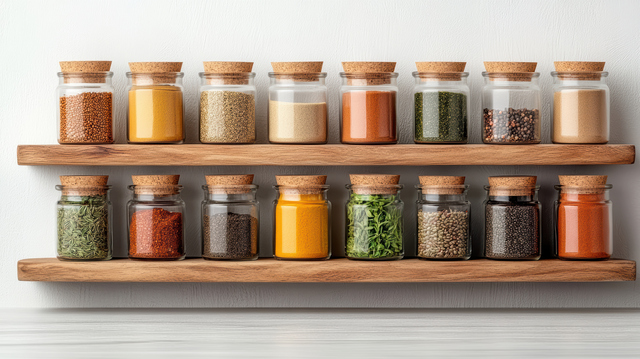
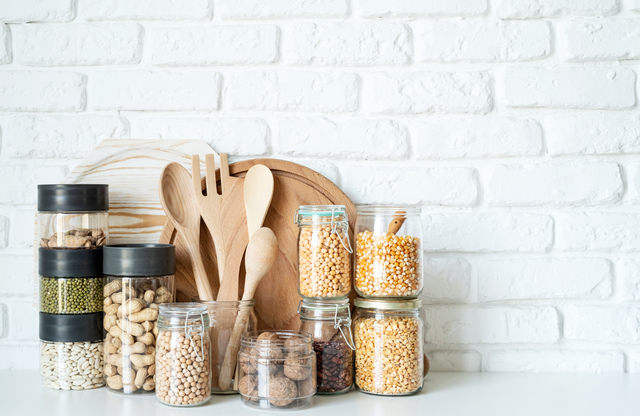
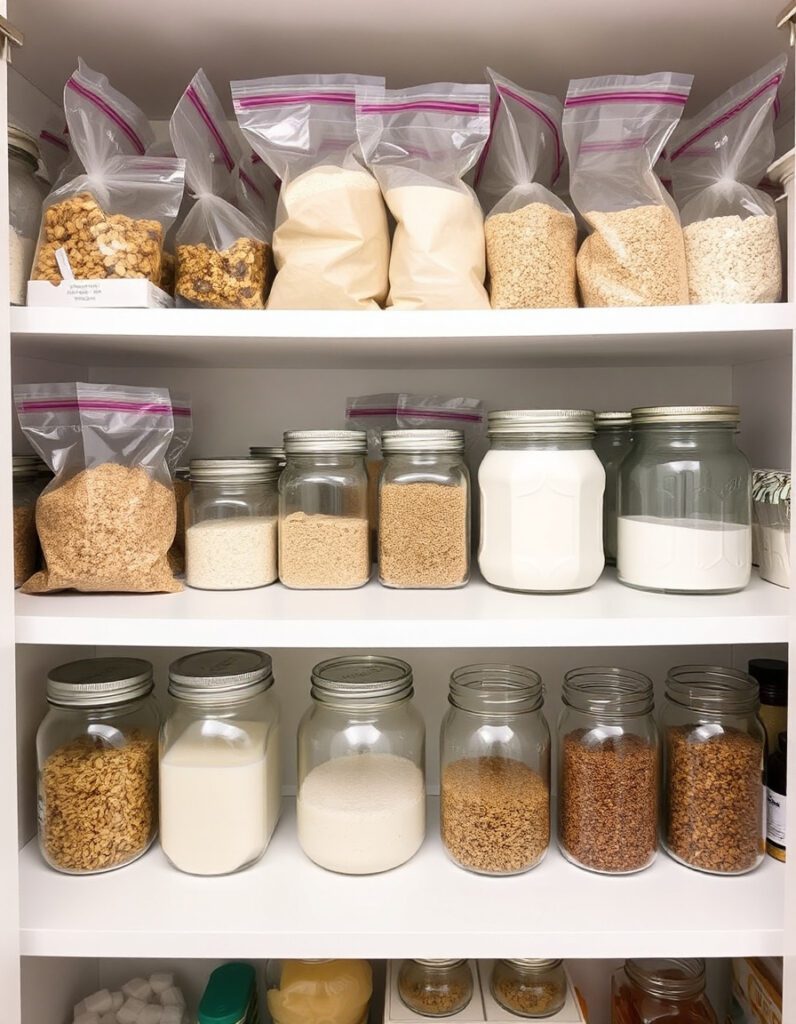
Transfer dry goods like flour, rice, and cereal into clear containers. This lets you see exactly how much remains. Labels help too, especially for items that look similar.
Clear storage also keeps food fresher. Pantry pests can’t get into sealed containers as easily as they can into torn bags.
Stack containers to make the most of vertical space. Uniform sizes create a cleaner look on pantry shelves.
Also Read: 6 Ways to Organize Spices When You Cook Often
4. Install Shelf Risers to Maximize Pantry Shelf Space
Shelf risers create two levels on one shelf. This works well for canned goods or jars. Instead of stacking items and hiding what’s in back, everything stays visible.
Risers are inexpensive and don’t require installation. You can rearrange them as your storage needs change.
They help prevent that avalanche effect when you try to grab something from the bottom of a stack.
5. Add Turning Trays for Hard-to-Reach Pantry Corners
Deep pantry shelves often have dead zones in the back. A turning tray brings those items to the front with a simple spin. Use them for oils or spices.
They work especially well in corner cabinets. Nothing gets lost or forgotten when you can rotate the entire section.
6. Hang an Over-the-Door Organizer for Small Pantry Items
If your pantry has a door, use it. Over-the-door pantry organizers create instant storage for packets, seasoning mixes, and small snacks. These items often get buried on shelves.
Door storage keeps lightweight items accessible. You can see everything at once without digging through a drawer or basket.
This fix works especially well in a small pantry where shelf space is limited.
Read More: 9 Smart Storage Solutions for Countertop Appliances You Rarely Use
7. Use Bins and Baskets to Organize Pantry Categories
Bins corral loose items that don’t stack well. Use one for snack bars, another for tea bags, and another for baking chocolate. Pull out the whole bin when you need something.
This prevents small items from spreading across the shelf. Bins also make it easier to clean because you can lift them out and wipe down the surface.
Choose bins that fit your shelf depth. Measure before buying to avoid wasted space.
8. Label Everything to Maintain Pantry Organization
Labels might seem unnecessary, but they help everyone in your household know where items belong. When each spot has a label, things actually get put back correctly.
Use a label maker or write on masking tape. Mark shelves, bins, and containers. Include zones like “breakfast,” “baking,” or “canned goods.”
Labels also speed up the process when you’re unpacking groceries. Everything has a home, and you’ll know if you’re running low on something.
Common Mistakes to Avoid When Organizing Your Pantry
Don’t buy storage solutions before decluttering. You need to know what you’re keeping first. Otherwise, you might purchase the wrong sizes or too many containers.
Avoid overloading shelves just because there’s space. Leave some breathing room so you can actually see and access items. A jam-packed pantry defeats the purpose of organizing.
Don’t skip the maintenance step. Set a reminder to check for expired items every few months so clutter doesn’t build up again.
FAQ: Decluttering Your Pantry
How do I keep my pantry organized long term?
Set up a system that’s easy to maintain. When you unpack groceries, put items in their designated spots right away. Do a quick check monthly to catch expired items before they pile up.
Keeping categories separate helps prevent chaos from creeping back in. If everyone knows where things go, the system tends to stick.
What is the best way to organize a cluttered pantry?
Start by removing everything from the shelves. Sort items into keep, toss, and donate piles. Clean the shelves while they’re empty.
Then group items by category and use containers or bins to keep each group contained. This approach gives you a fresh start and lets you see exactly how much space you’re working with.
How often should you declutter your pantry?
A quick check every month can help catch expired items early. A deeper declutter every three to six months keeps things from getting out of hand. This timing might vary based on how much you cook and how often you shop.
Regular maintenance takes less time than waiting until the space becomes overwhelming.
What should I remove from my pantry first?
Start with anything expired or stale. Then remove duplicates beyond what you’ll reasonably use. If you have three open boxes of the same cereal, consolidate them.
Next, clear out items you’ve been avoiding for months. If you haven’t used something in a year, it’s probably time to let it go.
Can you organize a pantry without buying new storage?
Yes, you can use what you already have. Shoeboxes, mason jars, and small baskets can serve as organizers. The key is grouping similar items together and keeping categories separate.
New storage can help, but it’s not required to create a functional system. Sometimes a simple rearrangement makes all the difference.
Do Turning trays really help with pantry organization?
They can make a difference in deep or corner spaces where items tend to get lost. Spinning the turntable brings everything to the front without rearranging the entire shelf. They work best for bottles, jars, and canned goods.
Turning trays might not suit every pantry layout, but they’re worth considering for problem areas.
Make Your Pantry Work for You
A less cluttered pantry can make your kitchen feel more manageable. These fixes address common storage challenges without requiring a complete overhaul. Start with one or two changes and build from there.
Small adjustments often create noticeable improvements. You might find meal planning becomes simpler when you can actually see what you have on hand.