8 Ways to Organize Cast Iron Pans by Size
This site contains affiliate links, view the disclosure for more information.
When you own several cast iron pieces, finding a place for each one tends to become a puzzle. Pans in different sizes take up cabinet space quickly. A simple storage approach can help you reach what you need without shuffling through a stack.
Why Size-Based Storage Matters
Cast iron pieces are heavy and come in varied diameters. When you organize cast iron pans by size, you reduce the risk of chips or scratches. Smaller pans fit into tighter spots, while larger skillets need more clearance.
Grouping by size also speeds up meal prep. You might notice it’s easier to grab the right pan when everything has a designated place. This approach works whether you have three pans or a dozen.
1. Use a Vertical Rack Designed for Pan Storage by Diameter
A vertical pan rack holds each piece upright in separate slots. You slide pans in by size, with the smallest up front and the largest in back. This setup keeps them from touching and makes it simple to see what you have.
Some racks adjust to fit different pan widths. Others come with fixed dividers. Either way, the vertical design saves cabinet depth and keeps handles from tangling.
You can place a rack inside a lower cabinet or on a countertop. It tends to work well when you cook often and want quick access. Just make sure the rack material supports the weight of cast iron.
2. Install a Wall-Mounted Pegboard System for Size-Sorted Hanging
A pegboard lets you hang pans by size along a kitchen wall. You arrange hooks from smallest to largest, creating a visual display of your cookware arrangement. Each pan hangs by its handle, so the cooking surface stays protected.
This method works in kitchens with limited cabinet space. The pans stay dry and aired out, which some people prefer for maintaining seasoning. You can also rearrange hooks whenever you add a new piece.
Keep in mind that pegboards need sturdy wall anchors. Cast iron is heavy, so the installation should hold the full weight of your collection.
3. Stack Pans in a Cabinet with Protective Liners Between Each Size
Stacking is a common approach when cabinet room is tight. You place the largest pan on the bottom and work your way up by size. A soft liner between each piece prevents scratches and seasoning damage.
Felt pan protectors or silicone mats work for this purpose. Some people use paper towels or dish towels in a pinch. The goal is a thin barrier that cushions without adding too much height.
This method requires you to lift the top pans to reach the bottom ones. It tends to work best if you use certain sizes more than others. Store your most-used pans on top for easier access.
Also Read: 8 Fixes for Countertops That Collect Too Much Stuff
4. Try a Pull-Out Drawer Organizer with Adjustable Dividers
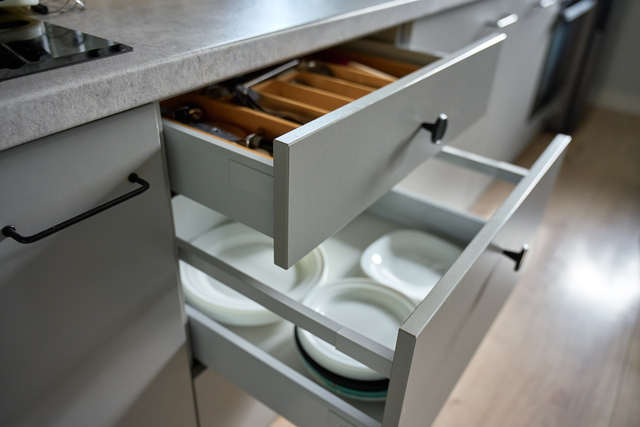
A pull-out drawer system brings kitchen pan organization to lower cabinets. You install a sliding base and add dividers that separate pans by size. When you pull the drawer, everything comes forward at once.
Adjustable dividers let you customize spacing as your collection changes. You might set narrow slots for small skillets and wider ones for large griddles. The drawer glides make it simple to see all your options without bending down.
This setup works well if you’re renovating or upgrading kitchen storage. It does require cabinet modification, so it’s more involved than other methods.
5. Hang Pans from a Ceiling-Mounted Pot Rack Arranged by Diameter
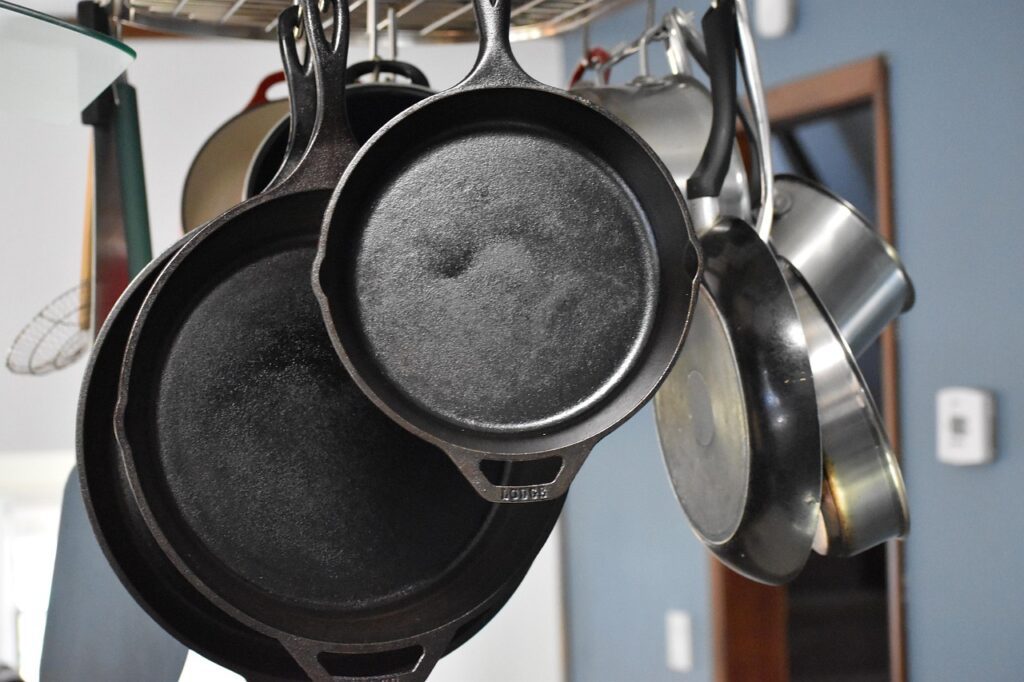
A ceiling pot rack keeps cast iron overhead and sorted by size. You hang smaller pans toward the edges and larger ones near the center for balance. This approach frees up cabinet and counter space entirely.
The rack needs strong ceiling support due to the weight of cast iron. Some models include shelves for lids or other items. You can arrange hooks in a way that makes sense for your kitchen layout.
Keep in mind that pans will be visible at all times. If you prefer a cleaner look, this might not be the right fit. But it does make grabbing a pan quick and straightforward.
Also Read: 7 Smart Ways to Tackle Kitchen Drawer Organization
6. Use a Countertop Pan Stand That Groups Pieces by Height
A countertop stand holds pans upright in a tiered or stacked design. You place smaller pans in lower tiers and larger ones in upper slots. The stand keeps everything visible and within arm’s reach.
This method works if you have counter space to spare. It tends to suit people who cook daily and want their cast iron storage solutions front and center. Some stands come with rubberized grips to prevent slipping.
The downside is that countertop storage takes up prep area. Weigh that against the convenience of not opening a cabinet every time you need a pan.
7. Store Pans in a Drawer with Felt-Lined Compartments Sized to Fit
A deep kitchen drawer with custom compartments can hold cast iron flat and sorted by size. You line each compartment with felt or another soft material. Each pan sits in its own space, so there’s no stacking or shifting.
This approach keeps pans out of sight and protected. You might need a carpenter or organizer insert to build the compartments. The drawer should have heavy-duty glides rated for cast iron weight.
If you have the drawer space and budget, this method offers a tidy solution. It tends to work well in kitchens where cabinet storage is already full.
Also Read: How to Organize Pots and Pans So You Can Find What You Need
8. Hang Pans on Hooks Inside a Cabinet Door Sorted Smallest to Largest
Cabinet door hooks let you hang smaller pans in an underused space. You mount hooks on the inside of a cabinet door and arrange pans by size. This keeps them accessible without taking up shelf room.
Lighter pans work best for this method. A 6-inch skillet or small griddle tends to hang without straining the door. Heavier pieces might cause the door to sag over time.
Check that the door closes fully with pans hanging. You don’t want handles blocking the latch or hitting shelves inside.
What to Avoid When Organizing Cast Iron by Size
Avoid hanging very heavy pans from weak hooks or racks. The weight can pull fixtures from the wall or damage the pan handle. Choose hardware rated for the load.
Don’t stack pans without protection between them. Metal-on-metal contact can chip seasoning or cause rust spots. A thin liner goes a long way in preventing damage.
Skip storing cast iron in damp or poorly ventilated areas. Moisture tends to encourage rust, even on well-seasoned pieces. Open shelving or breathable storage helps keep pans dry.
Frequently Asked Questions
How do you store cast iron pans by size in a small kitchen?
In a small kitchen, vertical storage tends to work best. A wall-mounted rack or pegboard keeps pans organized without using cabinet depth. You can also try a countertop stand that groups pieces by size in a compact footprint.
What is the best way to organize multiple cast iron skillets?
The best method depends on your space and cooking habits. A vertical rack or pull-out drawer keeps skillets sorted and easy to grab. If you cook daily, a ceiling rack or countertop stand might offer quicker access.
Can you stack cast iron pans by size for storage?
Yes, you can stack cast iron pans if you place a protective liner between each piece. Felt or silicone mats help prevent scratches. Start with the largest pan on the bottom and work up by size to keep the stack stable.
Where should you keep cast iron pans in the kitchen?
Cast iron pans can go in lower cabinets, on open shelves, or hung from walls or ceilings. The key is keeping them dry and accessible. Avoid damp areas or spots where they’ll sit untouched for long periods.
Conclusion
Finding a way to organize cast iron pans by size can simplify your kitchen routine. Whether you hang them, stack them, or use a drawer system, the goal is protecting your cookware and making it easy to reach. Try one of these methods and adjust as your collection grows.