This site contains affiliate links, view the disclosure for more information.
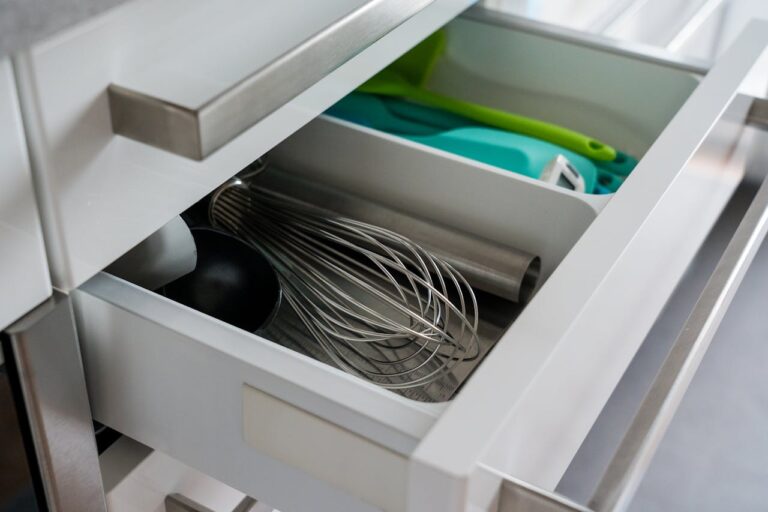
Kitchen drawers tend to collect items quickly. Utensils, gadgets, and random tools pile up until finding what you need becomes a challenge.
These strategies can help you create a system that might work better for your space. Small adjustments often make drawers easier to manage.
Why Kitchen Drawers Fill Up So Quickly
Drawers become catch-all spaces because they’re convenient. You toss in a whisk here, a can opener there, and suddenly everything’s mixed together.
Without a clear system, items don’t have designated spots. This can lead to clutter building up faster than you’d expect.
1. Use Adjustable Drawer Dividers for Kitchen Drawer Organization
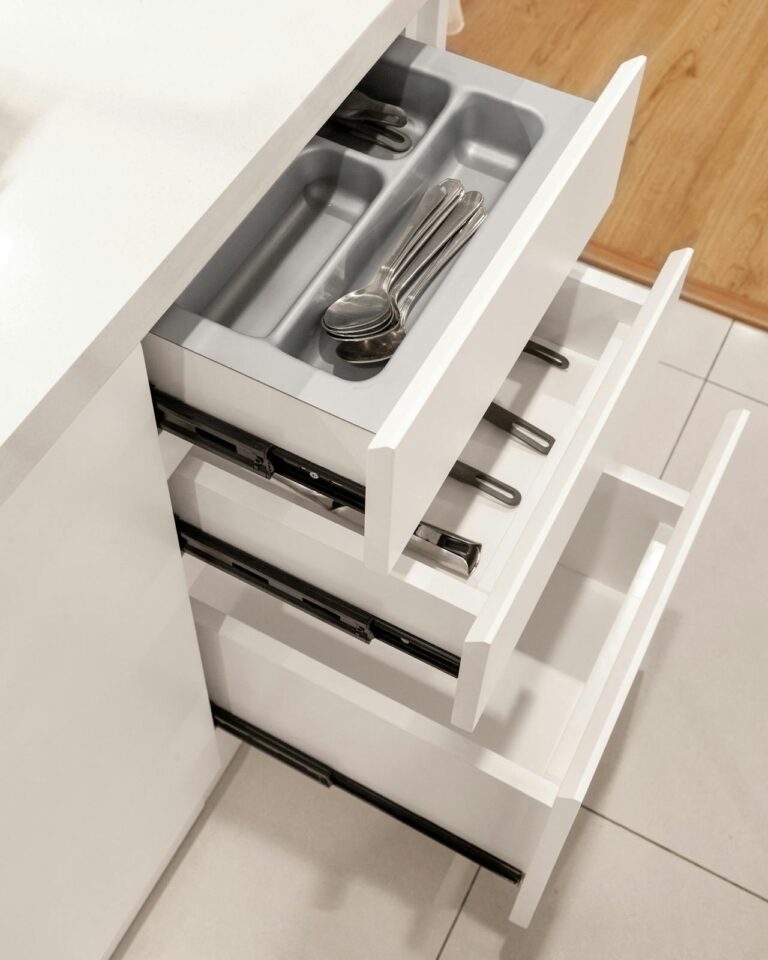
Dividers create separate zones within a single drawer. They can keep utensils from sliding around and mixing together.
Adjustable dividers let you customize the layout based on what you store. You can shift sections as your needs change over time.
This approach works well for utensil drawers where spoons, forks, and knives need their own spaces.
2. Stack Similar Items to Maximize Drawer Storage Solutions
Grouping like items together can make drawers more functional. Store measuring spoons with measuring cups, or stack small containers inside larger ones.
This method can help you see what you have at a glance. It might also prevent you from buying duplicates.
Keep frequently used items toward the front for easier access.
3. Declutter Drawers by Removing Duplicate Tools
Many kitchens accumulate multiple versions of the same tool. Three potato peelers or five spatulas can take up valuable space.
Go through your drawers and identify duplicates. Keep the ones in best condition and consider donating the rest.
Fewer items can mean more room for the tools you actually use regularly.
Also Read: How To Keep A Studio Kitchen Organized With Minimal Cabinets
4. Add Shallow Trays for Small Kitchen Storage Items
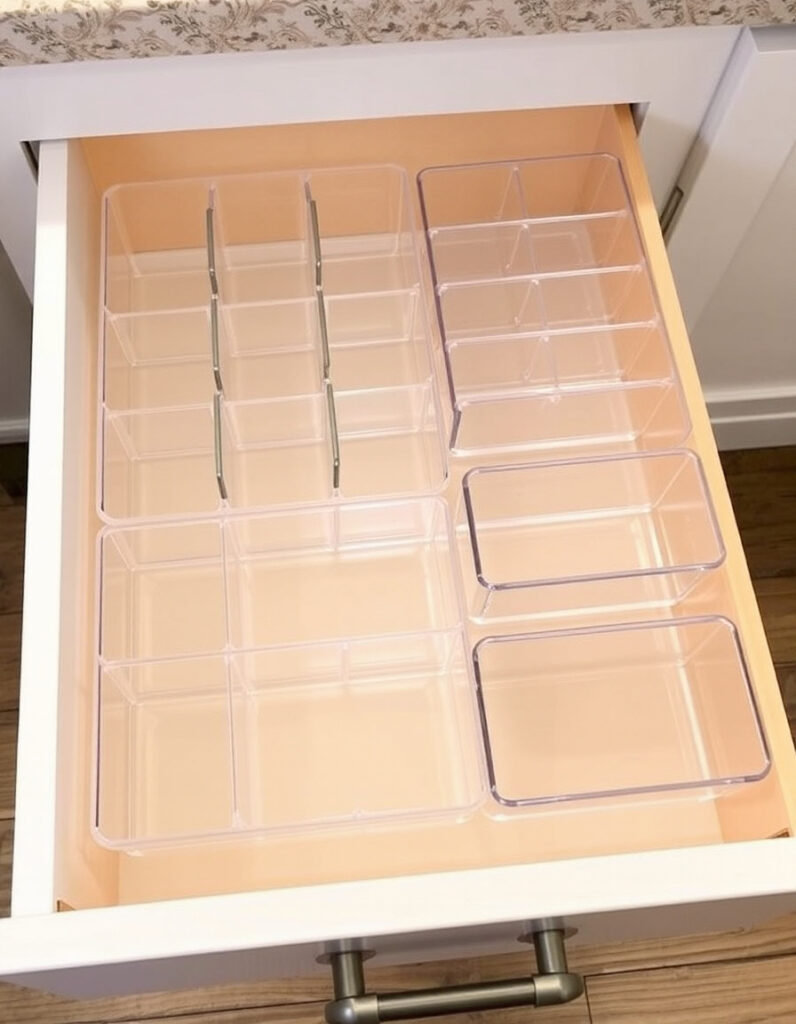
Small items like twist ties, bag clips, and corn holders tend to get lost. Shallow trays or small containers can corral these pieces.
Place trays toward the front of the drawer where they’re easy to spot. This might help reduce the time you spend searching for tiny tools.
You can use repurposed containers or purchase inexpensive organizer trays.
5. Organize Kitchen Drawers Vertically When Possible
Vertical storage can increase capacity in deeper drawers. Stand cutting boards, baking sheets, or pot lids on their sides.
This technique works well for items that typically stack flat. You might find it easier to grab what you need without moving everything else.
Vertical dividers or tension rods can help keep items upright and separated.
Read More: 6 Under-Sink Storage Ideas For Tiny Apartment Kitchens
6. Designate One Junk Drawer with Organizing Kitchen Drawers in Mind
A controlled junk drawer can actually be useful. Give miscellaneous items one specific spot rather than letting them spread through multiple drawers.
Use small dividers within this drawer to create zones. Batteries, pens, and takeout menus each get their own section.
This approach can contain the chaos while keeping other drawers more focused.
7. Review and Reset Drawer Storage Solutions Monthly
Drawers drift back toward clutter over time. A quick monthly check can help you catch problems before they become overwhelming.
Pull out items that don’t belong and return them to their proper spots. This might take just five minutes per drawer.
Regular maintenance tends to be easier than major overhauls.
Common Mistakes to Avoid with Drawer Organizers
Don’t buy organizers before measuring your drawer dimensions. Products that don’t fit properly can create more frustration.
Avoid storing items you rarely use in prime drawer real estate. Save the most accessible spots for daily essentials.
Skip the temptation to keep broken or damaged tools. If something doesn’t work, it’s taking up space that could be better used.
FAQ About Kitchen Drawer Organization
How do you organize kitchen drawers without dividers?
You can use small boxes, cups, or repurposed containers to create sections. Group similar items together with rubber bands or clips to keep them contained.
Even without formal dividers, clustering like items can help maintain order.
What is the best way to keep kitchen drawers from getting messy?
Assign each item a specific home and return things to their spots after use. Regular quick tidying sessions can prevent clutter from building up.
Consider limiting what goes in each drawer to items that truly belong there.
How often should you reorganize kitchen drawers?
A light monthly review can help catch problems early. Do a more thorough reorganization every three to six months, depending on how quickly things get cluttered.
Adjust the frequency based on how your drawers tend to accumulate items.
What should not be stored in kitchen drawers?
Sharp knives without protective covers can be dangerous and might damage other items. Heavy cast iron or extremely bulky appliances can strain drawer mechanisms.
Items that need ventilation or might leak, like certain produce or open containers, are better stored elsewhere.
Can drawer dividers damage kitchen drawers?
Most dividers are designed to be drawer-safe, but overly tight expandable models might put pressure on drawer sides. Check that dividers fit properly without forcing them.
Adhesive organizers can sometimes leave residue, so consider removable options.
How deep should kitchen drawer organizers be?
Organizers should be slightly shorter than your drawer depth to allow for smooth opening and closing. Measure your drawer’s interior height before purchasing.
Most standard organizers range from 2 to 4 inches deep, which works for typical kitchen drawers.
Moving Forward with Better Kitchen Storage
Small changes in how you organize kitchen drawers can make daily routines smoother. Start with one drawer and see what works for your space.
The goal is creating a system that’s easy to maintain. Try these approaches and adjust them based on what fits your kitchen best.