7 Smart Solutions for Small Kitchen Prep Space
This site contains affiliate links, view the disclosure for more information.
Working in a small kitchen prep space can feel limiting when you’re trying to cook a full meal. When counter space runs short, even simple tasks like chopping vegetables or rolling dough become a challenge. The good news is that you can expand your workspace without major renovations or costly updates.
Why Limited Kitchen Counter Space Affects Your Cooking
Small kitchen storage and prep areas can slow down your workflow. You might find yourself washing dishes mid-recipe just to free up a spot, or skipping certain meals because the setup feels too cramped.
Compact kitchen solutions don’t always require tearing out cabinets or expanding your footprint. Sometimes a few strategic additions can give you the room you need to work comfortably.
1. Install a Rolling Kitchen Cart for Additional Work Surface
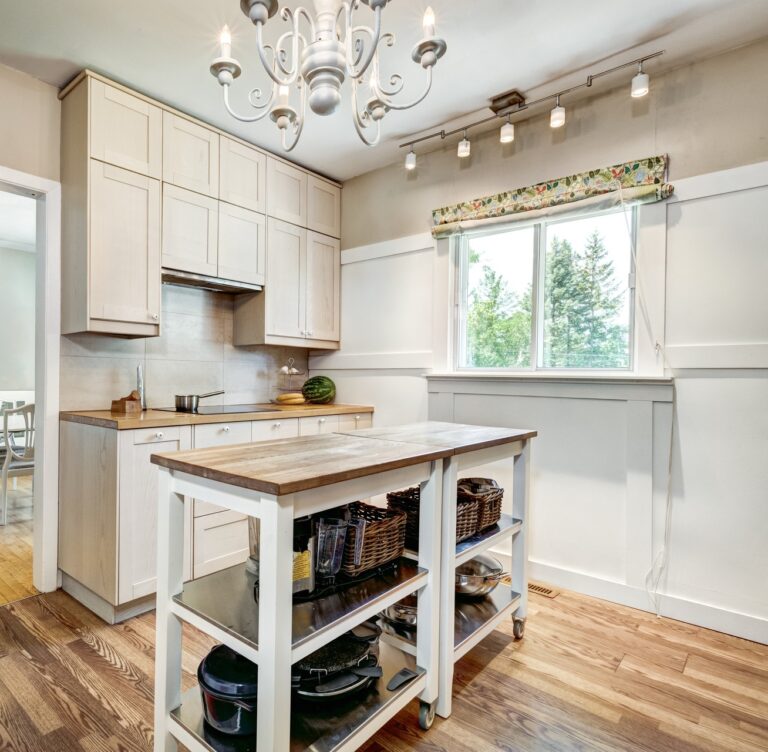
A rolling cart can add several square feet of usable prep area to your compact kitchen. These carts typically feature a solid top surface, storage shelves below, and wheels that let you move them wherever needed.
Look for models with locking wheels so the cart stays steady while you chop or knead. Some designs include built-in towel racks or hooks for utensils.
When you’re done cooking, you can roll the cart against a wall or into a corner. This flexibility helps maximize workspace without taking up permanent floor space.
2. Add a Cutting Board Over Your Sink for Instant Prep Space
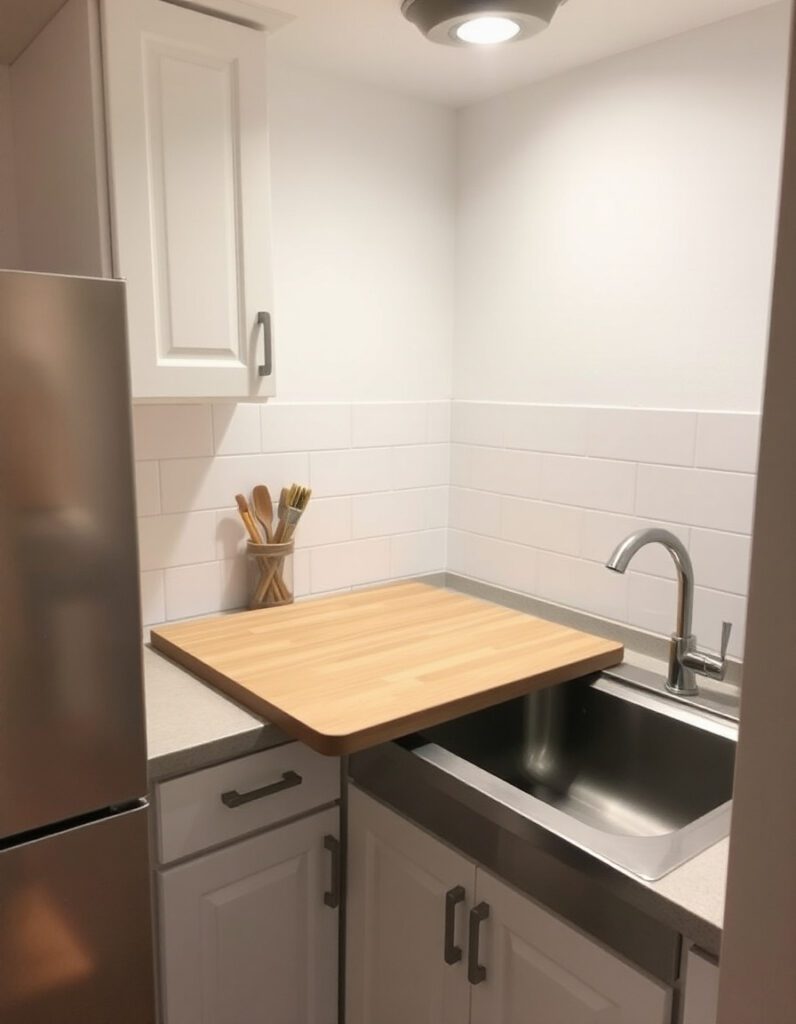
Placing a cutting board across your sink creates an instant work surface in limited kitchen space. These boards are designed to rest securely on the edges of your sink basin, giving you a stable platform for chopping and prep work.
This approach works well if your sink is undermount or drop-in style. Make sure the board extends far enough on each side to stay balanced.
The setup can free up your existing counters for plating or holding ingredients. Just keep in mind that you won’t be able to use the sink while the board is in place.
Read More: How To Keep A Tiny Kitchen Clean Without Constant Tidying
3. Use a Fold-Down Wall-Mounted Table for Small Kitchen Prep Space
A fold-down table mounts to your wall and flips up when not in use. This option can provide a dedicated prep area without eating into your floor space permanently.
Installation typically requires anchoring into wall studs for stability. Once secured, the table can handle typical kitchen workspace tasks like mixing or assembling dishes.
When folded, it sits nearly flush against the wall. This design works especially well in kitchens where every inch of floor space counts.
4. Place a Cutting Board Over Your Stove Burners for Extra Counter Space
Stove-top cutting boards fit over your burners to create temporary countertop alternatives. These boards usually come in materials like bamboo or tempered glass, designed to withstand brief contact with residual heat.
Make sure your burners are completely cool before placing the board. The added surface can hold ingredients, bowls, or utensils while you work at your main counter.
This solution is particularly useful during prep-heavy tasks when you need multiple staging areas. Just remember to remove the board before turning on any burners.
Also See: 6 Ways to Fix a Cutting Board That Keeps Slipping around
5. Install Pull-Out Surfaces From Cabinets or Drawers
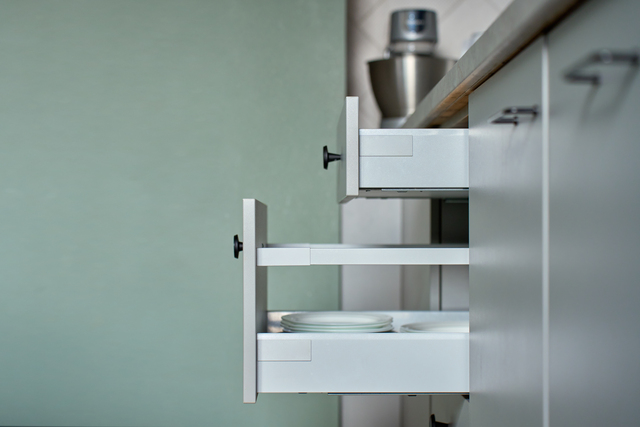
Pull-out cutting boards or shelves built into your cabinetry can give you hidden prep zones. These surfaces slide out when needed and tuck away when you’re done, keeping your small kitchen prep space organized.
Many older kitchens already have these features near the stovetop. If yours doesn’t, retrofitting a cabinet with a pull-out shelf might be possible depending on your cabinet construction.
The key benefit is that you gain additional work surface without adding visible clutter. The surface disappears completely when not in use.
6. Use Over-the-Sink Dish Racks That Double as Drying and Prep Areas
Expandable dish racks that sit over your sink can serve dual purposes. When you’re not drying dishes, the rack provides a flat, stable area for small prep tasks or holding ingredients.
Look for racks with removable components so you can customize the layout. Some models include separate sections for utensils, cutting boards, or produce.
This option works best if you have a double sink or a wide single basin. The rack can help keep your main counters clear while still giving you functional workspace.
Also Read: How To Organize Kitchen Cabinets By Frequency Of Use
7. Add a Butcher Block or Portable Island for Compact Kitchen Solutions
A small butcher block on legs or a portable island can anchor your prep area. These pieces typically measure 24 to 36 inches across and include storage underneath for pots, pans, or dry goods.
Butcher block surfaces are durable enough for heavy chopping and can handle hot pots in a pinch. Portable islands often come with wheels, making them easy to reposition as your needs change.
The added height can also create more comfortable working conditions. If you’re taller or shorter than average, you might find a dedicated prep height more ergonomic than standard counters.
Things to Consider When Adding Small Kitchen Prep Space
Before purchasing any new surfaces, measure your available floor and wall space carefully. A piece that looks compact online might overwhelm a truly tiny kitchen.
Think about how often you’ll actually use the addition. If you cook daily, investing in a sturdy cart or island can make sense. For occasional cooks, a simple cutting board extender might be enough.
Storage compatibility matters too. If your new prep surface doesn’t include shelves or hooks, you might end up with more clutter than before.
Frequently Asked Questions About Small Kitchen Prep Space
How to add more counter space in a small kitchen?
Rolling carts, fold-down tables, and sink-top cutting boards are among the most practical options. Each provides additional work surface without requiring permanent changes to your layout.
The best choice depends on how much floor space you can spare. Wall-mounted options work well if floor space is tight.
What can I use as extra prep space in a small kitchen?
Stove-top cutting boards, pull-out cabinet surfaces, and over-the-sink racks can all serve as temporary prep zones. These solutions let you expand your workspace only when you need it.
Portable butcher blocks or small islands offer more permanent options. They can be moved or repositioned as your cooking routine changes.
How to maximize workspace in a tiny kitchen?
Focus on multi-functional pieces that serve more than one purpose. A cart with storage shelves gives you both prep area and organization space.
Vertical storage and fold-away surfaces can help keep your limited kitchen space functional. The goal is to make every square inch work harder.
What are alternatives to counter space in small kitchens?
Wall-mounted drop-leaf tables, sink covers, and stove-top boards all create usable surfaces without adding permanent fixtures. Pull-out cutting boards hidden in cabinets can also expand your options.
Portable islands and rolling carts offer flexibility if you have a bit of floor space. These pieces move with you and adapt to different cooking tasks.
Can I install a fold-down table in a rental kitchen?
Many fold-down tables require wall anchors, which might not be allowed in rental units. Check your lease before drilling into walls.
Some temporary options use strong adhesive mounts or tension rods. These alternatives can provide small kitchen storage and prep surfaces without permanent modifications.
Making Your Small Kitchen Work for You
Expanding your small kitchen prep space doesn’t have to mean expensive remodeling or major construction. Simple additions like carts, cutting boards, or fold-down surfaces can give you the room you need to cook comfortably.
The key is choosing solutions that match your cooking style and available space. Start with one or two additions and see how they fit into your routine before investing in more.
With a bit of creativity, even the smallest kitchen can become a functional, enjoyable place to prepare meals.