6 Practical Solutions for Tupperware Lids That Keep Disappearing
This site contains affiliate links, view the disclosure for more information.
Tupperware lids have a habit of vanishing when you need them most. Whether they’re buried under other containers or mixed up with mismatched pieces, the search can turn a simple meal prep task into a frustrating scavenger hunt. These tupperware lid storage solutions can help you create a system that keeps lids accessible and organized.
Why Tupperware Lids Are So Hard to Keep Track Of
Food storage container lids tend to scatter because most kitchen cabinets aren’t designed with them in mind. Lids are flat, stackable, and easy to shove into tight spaces where they quickly get separated from their matching bases.
Without a dedicated system, lids often end up stored differently than containers. This mismatch makes it harder to maintain any sense of order, especially when you’re in a hurry.
1. Use a File Organizer to Store Tupperware Lids Vertically
A desktop file organizer can work surprisingly well for plastic lid storage. The vertical slots keep each lid upright and separated, so you can flip through them like files instead of unstacking an entire pile.
This method works especially well in deep drawers or on pantry shelves. You can see every lid at once, which makes finding the right size much faster.
Just keep in mind that lids with unusual shapes might not fit as neatly. Standard round and square lids tend to work best with this approach.
2. Install a Tension Rod Inside Your Cabinet for Container Lid Organization
A tension rod mounted inside a cabinet door or between two cabinet walls can hold lids upright. Simply slide the lids into the space between the rod and the cabinet surface, and they’ll stay in place without additional hardware.
This tupperware organization trick takes up minimal space and keeps lids out of the way. It’s particularly useful in cabinets where vertical space goes unused.
The tension rod method works best with medium to large lids. Smaller lids might slip through unless you use two rods for extra support.
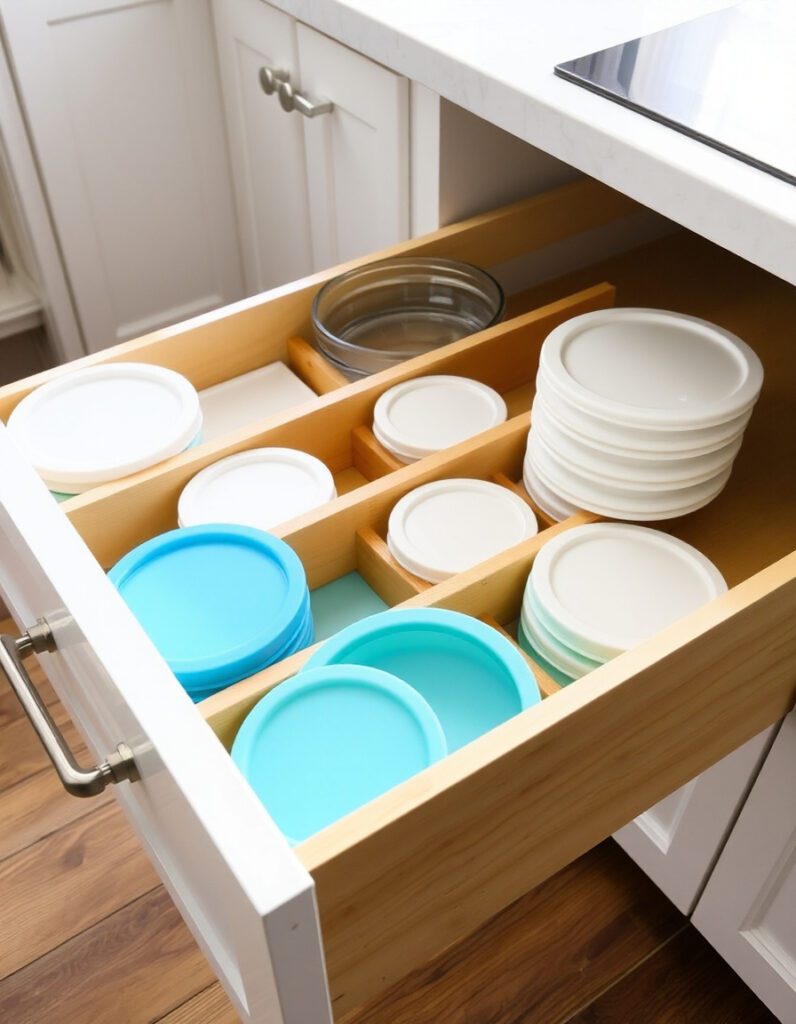
3. Dedicate a Drawer Divider System to Organize Container Lids
Drawer dividers can create designated sections for different lid sizes. This keeps lids from sliding around every time you open the drawer, and it prevents them from getting buried under other items.
You can use adjustable dividers to customize the layout based on your collection. Kitchen lid organizers like these help maintain clear boundaries between sizes.
Labeling each section can save even more time. A quick glance tells you exactly where each lid belongs.
4. Stack Lids Inside Their Matching Containers for Tupperware Lid Storage Solutions
Storing lids directly inside their matching containers might seem obvious, but it eliminates the separation problem entirely. Each container becomes a complete unit, so you’re never searching for the right lid.
This approach reduces the total number of items you need to organize. Instead of managing containers and lids separately, you’re dealing with one stack of nested sets.
The downside is that this method takes up more vertical space. It works best if you have taller cabinet shelves or can afford to dedicate extra room to food storage items.
5. Use a Magazine Rack or Wire Basket for Lid Storage Ideas
A magazine rack mounted on the inside of a cabinet door can hold lids at an angle, making them easy to grab. Wire baskets work similarly and can be placed on shelves or inside drawers for quick access.
Both options keep lids visible and contained. You won’t need to dig through a pile to find what you’re looking for, which can make meal prep feel less chaotic.
These organizers work well for households with lots of missing tupperware lids because they encourage you to return lids to a specific spot. The visual reminder helps reinforce the habit.
6. Try a Pegboard System for Customizable Tupperware Organization
A small pegboard installed inside a cabinet or on a wall can hold lids using hooks or pegs. This setup is fully customizable, so you can adjust the spacing as your container collection changes.
Pegboards offer flexibility that fixed organizers don’t. You can add or remove pegs to accommodate different lid sizes and shapes without buying new storage tools.
This method requires a bit more setup time initially. Once it’s in place, though, it can handle a wide variety of food storage container lids without much adjustment.
What Makes Tupperware Lid Organization Stick
Consistency matters more than the specific system you choose. Picking one method and sticking with it tends to work better than switching between multiple approaches.
Consider how often you use your containers and where you naturally reach for them. The best organize container lids strategy is one that fits your kitchen layout and daily routine.
If you share kitchen space with others, choose a system that’s intuitive enough for everyone to follow. Clear visual cues and designated spots can help maintain order over time.
Frequently Asked Questions
How do you keep tupperware lids organized in a small kitchen?
Vertical storage methods work best in tight spaces. File organizers, tension rods, or cabinet door racks can keep lids accessible without taking up valuable counter or shelf space.
Focus on using the inside of cabinet doors or narrow drawer sections. These areas often go unused but can hold a surprising number of lids when organized properly.
What is the best way to store plastic container lids?
The most effective approach depends on your cabinet layout and how many containers you own. Vertical storage with dividers or file organizers tends to work well for most kitchens because it keeps lids visible and easy to grab.
If cabinet space is limited, storing lids inside their matching containers can reduce clutter. This method trades vertical space for convenience and eliminates mismatches.
Why do tupperware lids go missing so easily?
Lids are flat and stackable, which makes them easy to slide into random spots during cleanups. They often get separated from their matching containers and end up in different cabinets or drawers.
Without a dedicated storage spot, lids tend to migrate to wherever there’s available space. Over time, this scattering makes it harder to find the right lid when you need it.
How do you match tupperware containers with lids?
Storing lids inside their matching containers is the simplest way to keep pairs together. If you prefer separate storage, grouping lids by size and shape can speed up the matching process.
Some people label containers and lids with matching stickers or numbers. This system works well for large collections where visual matching becomes difficult.
Can drawer organizers really help with container lid storage?
Drawer organizers can create clear sections for different lid sizes, which prevents them from sliding around. This setup works especially well if you have a dedicated drawer for food storage items.
Adjustable dividers let you customize the layout as your container collection changes. The key is choosing dividers that fit your drawer dimensions and can hold lids upright.
What should you do with lids that don’t have matching containers anymore?
It’s usually best to recycle or discard lids without matching containers. Holding onto orphaned lids takes up storage space and adds to visual clutter.
If you’re unsure whether a container is truly missing, set the lid aside in a temporary spot for a month. If the matching piece doesn’t turn up, it’s probably safe to let the lid go.
Getting Your Tupperware Lid Storage Under Control
Finding a system that works for your space can make kitchen organization feel more manageable. Whether you choose vertical file storage, drawer dividers, or a pegboard setup, the goal is to create a habit that keeps lids where you can find them.
Start with one method and give it a few weeks to see how it fits your routine. Small adjustments along the way can help you fine-tune the system until it feels natural.